Decode
Dolby Atmos, DTS:X Pro, Auro-3D and multichannel PCM are interpreted and mapped into the room.
A specialist reference and project-enquiry resource for high-performance immersive-audio processors — from premium 11-channel systems through networked 32-channel reference platforms.
It is the control centre for speaker routing, bass management, room optimisation, timing, level, HDMI switching, format decoding and — in the most advanced systems — active crossovers and networked audio.
The right processor is therefore determined by the room architecture. Speaker count, subwoofers, amplification, analog versus digital signal flow and long-term upgrade path all matter before a model name does.
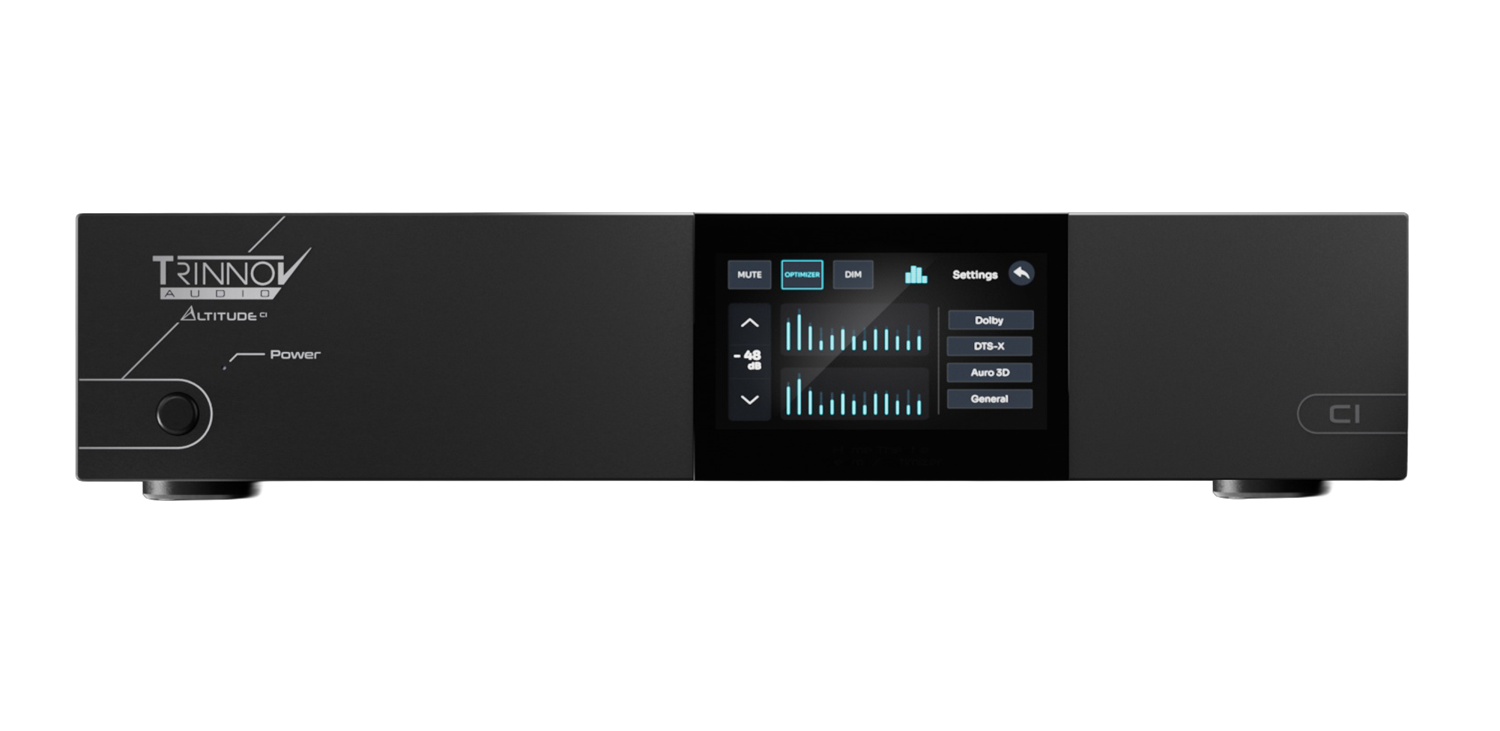
Optimizer, Remapping and WaveForming move the processor beyond decoding. Speaker placement can be analysed in three dimensions, bass can be controlled as a system, and the signal path can scale from conventional analog outputs to AES/EBU and native Audio over IP.
Dolby Atmos, DTS:X Pro, Auro-3D and multichannel PCM are interpreted and mapped into the room.
Each bed, height, wide and subwoofer channel must reach the correct physical output.
Crossovers and subwoofer routing determine where low-frequency energy is reproduced.
Room correction addresses timing, level, frequency response and — on some platforms — spatial behaviour.
HDMI architecture determines compatibility with 4K120, 8K, HDR, eARC and modern sources.
Control systems, remote support, presets and network audio turn the processor into part of the building.
Channel count is only the beginning. Output format, amplification, bass topology, calibration workflow and the way a system may grow can be more important than the badge on the front panel.
A familiar and flexible route for systems built around premium multichannel amplifiers. Trinnov Altitude16/32, Anthem, Marantz, Lyngdorf and several specialist processors fit naturally here.
Useful when part of the room remains conventional while subwoofer arrays, active loudspeakers or selected amplifier channels move into the digital domain.
AltitudeCI and StormAudio Evo show what changes when Dante/AES67 is treated as an output architecture rather than an accessory connection.
Steinway Lyngdorf is the clearest example: processor, room correction and digital loudspeaker architecture are designed as one system.
The processor sits in the middle, but its performance is inseparable from everything on either side of it.
Understand the signal chain →The way a processor routes, delays, equalises and optimises multiple subwoofers can matter more than the number of RCA or XLR sockets on the back panel. Large cinemas increasingly treat bass as a spatial system rather than a single mono channel.
For years, the biggest jump in processor capability happened when a project moved from a conventional 11–15 channel platform into Trinnov or StormAudio territory. Newer 16-channel products are compressing that gap.
ARCAM AVP45, AudioControl Hyperion, JBL Synthesis SDP-58 and other platforms now make sixteen processed channels, advanced Dirac options and modern HDMI available without necessarily moving to a 20–32 channel architecture.
Explore the new ARCAM AVP45 →
Decode, route, manage bass, calibrate and control the cinema.
02From 7.1.4 to 9.4.6 and beyond.
03Optimizer, Dirac, ARC and RoomPerfect.
04Why processor output architecture changes the rack.
05Independent bass channels, arrays and optimisation.
06Software, HDMI boards, channel licensing and modular I/O.
Send the room dimensions, proposed speaker layout, subwoofer plan, amplification and video requirements. The processor shortlist should follow the architecture — not the other way around.